Full transcript
The Faerûnian Pantheon
Different pantheons on Toril have spheres of influence over different areas of the globe. The Celestial Bureaucracy of Kara-Tur rules over Kara-Tur. The Zakharan Pantheon rules over Zakhara. And the Maztican Pantheon rules over Maztica. Humans had numerous unrelated pantheons of different cultures across Faerûn. As those cultures intermingled, these pantheons merged into a single Faerûnian pantheon. The Faerûnian Pantheon has dominion over the vast majority of Faerûn. The exception being Chult, where the Chultan Pantheon holds sway.
Other gods granted the deity Ubtao dominion over Chult and agreed never to extend their influence into his territory. As Ubtao agreed to stand guard over the Peaks of Flame against Dendar the Night Serpent. And the Mulhorandi Pantheon with ultimate divine authority in Mulhorand and Murghom. While sharing equal power with the Faerûnian Pantheon across Unther, Chessenta and the ancient desert of Raurin. Besides geographic and cultural connections, pantheons are also distinguished by race. Other humanoid races like dwarfs, drows, elves, gnomes, halflings and orcs have deity groups within the Faerûnian Pantheon. While other sentient races like kobold, goblinoids and giants venerate their own set of deities outside of the Faerûnian Pantheon.
Time of Troubles
Above all pantheons, human or non-human in all spheres of influence stands Ao, the only over deity in Toril. The relationship between the deities and mortals of Toril changed during the Time of Troubles, when Bane and Myrkul stole from Ao, the Tablets of Fate that govern the deities’ divine responsibilities. Furious that his deities cared more for power struggles than their divine duties and their mortal worshippers. Ao casted the deities from their divine realms and forced them into mortal avatar bodies, stripping them of their divinity. The chaos that followed was catastrophic.
Divine spells stopped working. Arcane magic became unpredictable. Avatars of deities clashed and killed each other and the divine order of the realms was plunged into uncertainty. When the Time of Troubles finally ended, Ao’s new decree meant that deities can no longer ignore their faithful worshippers. Their divine power and even existence will now depend on the number and fervor of their worshippers.
A deity’s rank and portfolio
The powers of Faerûnian deities are ranked across four tiers: greater, intermediate, lesser, and demigod. Each deity’s standing is determined by the deities’ number of worshippers and their devotion towards the deities’ portfolio. A deity’s portfolio is their divine responsibilities, the specific list of concepts and ideals they govern. Without mortal’s worship and dedication toward the portfolio, the deity decline in deific rank and can even perish. Almost everyone in the Forgotten Realms worship several deities, as religions in the realms are polytheistic. What matters to a deity is not who else a follower worships, but rather which portfolios are venerated and which deities appeased.
Death of Deities
The death of deities left Faerûn with many ruined temples of fallen gods. Small cults dedicated to resurrecting fallen deities emerge constantly, some having genuine connections to dead deities with residual divine power. Among the most notable fallen deities are Myrkul the former Lord of the Dead, Bhaal the former Lord of Murder, and Moander the deity of rot and corruption. Yet death is not necessarily the final chapter for a deity of Toril. Divine resurrection remains a genuine possibility, evidenced most dramatically by the recent return of the dark god Bane after his death.
Greater Deities
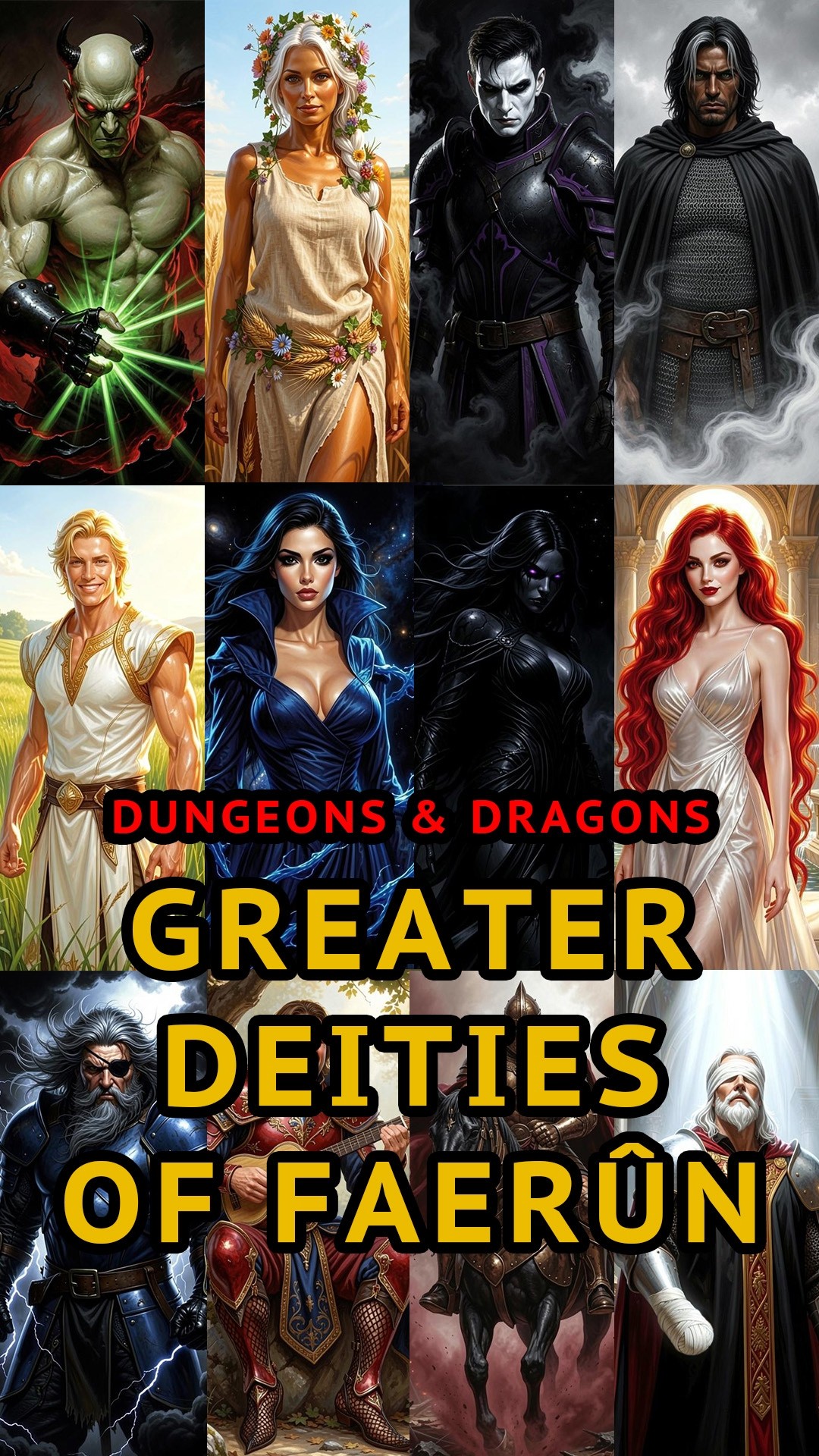
With millions of worshipers, greater deities stand at the very top of the pyramid of divine power. The most powerful of greater deities rule over other deities, just as mortal sovereigns rule over commoners. At the forefront of evil stands Bane the Black Lord, the Black Hand, the Lord of Darkness. He is the lawful evil greater deity of strife, hatred, tyranny, and fear. Bane has conquered death itself, returning to the mortal world to spread fear and hatred throughout civilized lands, and to reassure the common mortal that tyranny, though it may suffer occasional defeat, will never die.
Though Bane transcended mortality centuries ago, his primary goal remains remarkably human, the total domination of all Faerûn, with every throne under his followers’ tyrannic rule. The Church of Bane operates under an unforgiving hierarchy. Questioning or disobeying a superior is an insult to Bane’s supremacy, punishable by torture, disfigurement, or death. Bane commands his clerics and followers to seize positions of power, subvert governments to carry out their agendas under cover of the rule of law, and use their influence to spread strife, fear, and hate. Bane has established a working relationship with Loviatar, Mask, and Talona, but as these deities desperately fear him, the alliances are not strong.
He hates virtually the entire Faerûnian Pantheon, but holds special antipathy for Torm, Cyric, Mystra, Tempus, Helm, Lathander, Oghma, and Ilmater in that order. As old as Toril itself, Chauntea the Great Mother, the Grain Goddess, the Earth Mother, is the neutral good greater deity of agriculture, cultivated plants, and summer. She is among the oldest of the Faerûnian deities, brought to life by Shar and Selûne when they first created the world of Toril.
In early centuries, Chauntea was known as Jannath the Earth Mother, a wild deity who ran with animal packs and rejoiced in the unhindered wilderness. Her worshipers claim that Chauntea gave birth to all the mortal races. But she has grown with her world, guiding the first mortal wanderers to give up the uncertainty of gatherer life for the stability of the field, becoming the beloved patron of agriculture and bountiful harvests. Chauntea is seen by most Faerûnians as an integral part of the natural cycle of life.
Wealthy landowners and simple farmers alike offer prayers to Chauntea for bountiful yield. She long ago ceded the wild lands to other deities, though she still preaches a reverence for nature and urges the folk of civilized lands to repair what they have damaged. Druidic worshipers of Silvanus, though, believe that the Great Mother has betrayed herself and sold out the world to the all-too-rapid encroachment of civilization. Chauntea shares a deep fondness for Lathander that has at times become intimate, and the two deities spend a great deal of time together.
Her ties to other nature deities, particularly Mielikki and Eldath, remain strong. Talona is Chauntea’s most hated foe, as her propensity to bring blight, poison and disease to the natural world fills the Earth Mother with great fury. She views the return of Bane as a dark omen, and she opposes Auril, Malar, Talos, and Umberlee. Cyric the Prince of Lies, the Dark Sun, the Black Sun, is the chaotic evil greater deity of murder, lies, intrigue, deception, and illusion.
He is a petty, self-centered, megalomaniacal deity who holds himself above all others. The Prince of Lies delights in spinning webs of deception that lead both mortals and deities to their ruin, or pit friends and lovers against one another. He has an immense following of power-hungry mortals throughout Faerûn. The Church of Cyric is widely and justly hated across all Faerûn, for the Dark Sun’s followers are pledged to spread lies and work murder everywhere they travel.
Even the followers of evil-aligned deities view Cyric’s church as a threat mad with power, as the Prince of Lies has shown himself willing to do almost anything, including kill rival deities whose power he covets. Cyric has no allies, although from time to time he pretends to work with various deities in order to ensure their eventual downfall. He particularly hates Kelemvor and Mystra, his fellow adventurers during the Time of Troubles before they ascended to become deities.
However, he now views Bane as the greatest threat to his power, and the brewing war between these two lords of evil may eventually consume Faerûn in a great holocaust. Kelemvor, the Lord of the Dead and Judge of the Damned, is the lawful neutral greater deity of death and the dead. He is the latest in a long line of Faerûnian deities to hold this portfolio. Death has been Faerûn’s greatest constant, its nature shaped by a succession of deities. First the inscrutable Jergal, then the fearsome Myrkul, to the chaotic Cyric, and now the just Kelemvor.
Kelemvor urges his clerics to act as stewards of the afterlife, and to teach that death is a natural part of life, with nothing to fear in the transition for the worthy and good. He views all undead as abominations, ordering his servants to destroy them at every turn, maintaining the sacred boundary between life and death with unwavering conviction. Kelemvor lives with and learns the profound responsibilities of his station from Jergal, the former Lord of the Dead.
However, Jergal’s chilling lack of pity disturb Kelemvor, and he respects but does not entirely trust the elder deity. Cyric plots endlessly to regain dominion over death, a portfolio he held briefly. Kelemvor hates Velsharoon for his support of necromancy and Talona for her poisons and diseases, which causes many premature deaths.
Lathander the Morning Lord is the neutral good greater deity of athletics, birth, creativity, dawn, renewal, self-perfection, spring, vitality and youth. He embodies cheery optimism, making him perfect for prayers before new beginnings, fresh starts and boundless possibility. Among the oldest of the Faerûnian Pantheon, Lathander’s faith remains extremely popular, especially among the young and idealistic. His teachings of proactivity and renewal resonate across all social classes.
Lathander urges the destruction of undead, which he views as a vile corruption that mocks creation and true life. Chauntea appreciates Lathander’s exuberance more than any other deity, perhaps because it brightens her ancient soul. They believe their fates are intertwined, and their romance has faded and flared intermittently across centuries. Lathander’s friendly demeanor makes him almost as popular among other deities as he is among the mortals of Toril.
He gets on well with other idealistic deities such as Eldath and Lliira. His command over creativity brings him into friendly contact with Oghma, Milil and Gond, and his unflinching hatred of the undead has made him an ally of Kelemvor. Lathander particularly dislikes Shar, whom he views as an eternally corrupting force, constantly acting against him and his church. He somewhat naively holds evil deities such as Bane, Cyric, Loviatar, and Talos personally responsible for the majority of Toril’s ills.
Mystra the Lady of Mysteries and Mother of All Magic is the neutral good greater deity of magic, spells, and the Weave. She tends to the Weave, of which she is effectively the embodiment. The Weave is the conduit that enables all mortal spellcasters to safely access the raw force of magic, making Mystra one of the most powerful beings, involved with all of Toril. Mystra is the third deity to hold the position since the rise of Netheril, from Mystryl who died saving the Weave from Karsus’s Folly, to the second Mystra, creator of the Chosen of Mystra including Elminster.
The current Mystra was the mortal Midnight who ascended to divinity during the Time of Troubles and assumed the name and position after the former died during the Time of Troubles. Mystra’s advisor is Azuth and under him, Savras and Velsharoon indirectly report to her. She maintains close alliances with deities of knowledge such as Oghma, Deneir, and Milil as well as the deities of magic and other pantheons including Corellon Larethian. Her ties with Selûne are strong and growing.
She still hates Cyric with a passion and views the return of Bane with hatred, but her chief antagonist is Shar, who secretly created the Shadow Weave in response to Selûne’s creation of the original Weave, threatening the very integrity of magic. Oghma the Lord of Knowledge and Binder of What is Known is the neutral greater deity of bards, inspiration, invention, and knowledge. He judges all ideas deciding whether they will be allowed to spread or die with their originator.
In the earliest days of existence, Oghma ventured to the newly created Toril and gave names to chaotic, shapeless concepts, binding them to physical form and giving order to primordial chaos.
His dominion over the realm of ideas continues to this day, but now prefers a doctrine of ideological conservatism, hoping that no new thought disrupts the delicate balance he has nurtured since the beginning of time. Oghma is honored by members of every race and social class, served by sages, wizards, and all who value knowledge exchange. He is also the patron of bards, his own oratory, performance and musical skills legendary. Together, Oghma, Deneir, Milil, and Gond are known as the Deities of Knowledge and Invention.
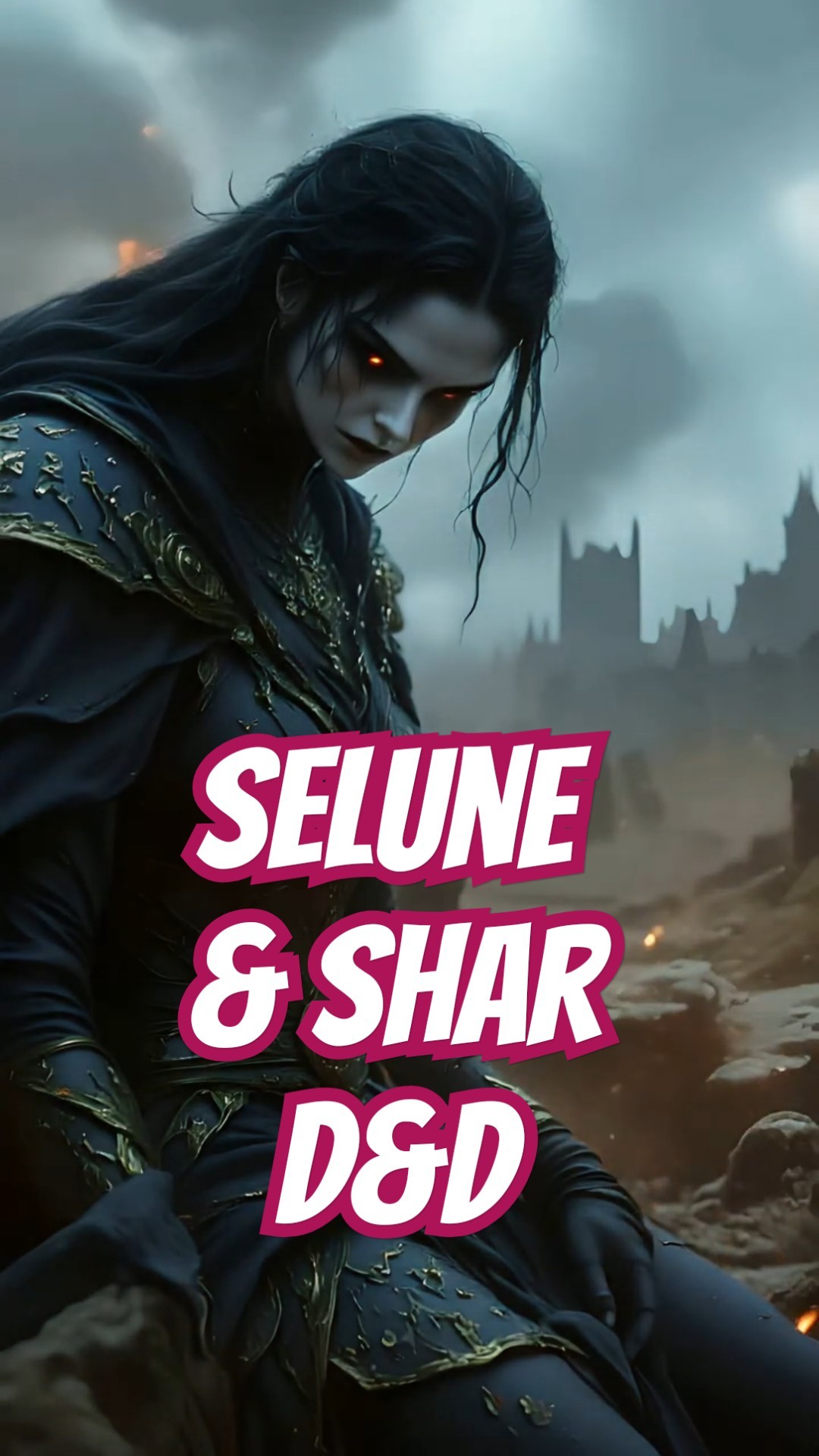
He appreciates Gond’s enthusiasm and creativity, but frowns at the Wonderbringer’s constant desire to push technology, putting innovation ahead of introspection. Oghma dislikes Mask, Cyric, and Bane, viewing them as the most credible threats to his beloved balance. Shar, the Mistress of the Night, the Lady of Loss, the Dark Goddess, is the neutral evil greater deity of caverns, dark, dungeons, forgetfulness, loss, night, secrets, and the Underdark.
Shar reflects the primal dark, the flawless void erased at the beginning of time when the over-deity Ao created the universe. Her heart eternally longing for a return to peaceful nonexistence. Since her earliest battles with Selûne, Shar has gained dominion over pain hidden but not forgotten, carefully nurtured bitterness and quiet revenge for old slights.
Deeply twisted, she favors secrets, underhanded dealings, and subterfuge. Many seek out Shar’s servants with the belief that her clergy aids those who have been wronged or who have suffered a great loss. Instead, her clerics reinforce regrets and betrayal, turning sorrow into bitterness and desire for revenge. Shar’s only frequent ally is Talona. Her battle with Selûne have continued since the beginning of Toril, her creation of the Shadow Weave, a product of the ongoing battle. She attempts to consume Mask as well, for his dominion over shadow. Shar’s love of dark spaces brings her into frequent conflict with deities of light and fire.
Silvanus the Oak Father, the Forest Father, the Treefather, is the neutral greater deity of wild nature and druids. A wise and beneficent but paternalistic deity, he is emotionally distant but wrathful toward those who threaten wild places. The Church of Silvanus endlessly strives to preserve the sacred balance, working to redirect development and control populations through various means to protect nature from civilization’s encroachment. As a result, the clergy of Silvanus is sometimes perceived as enemies of those who would settle new lands, little different from those faiths that venerate the destructive Deities of Fury.
Silvanus is served faithfully by Eldath and Mielikki, and is closely allied with Chauntea. He is bitterly opposed to Malar and his church, for the Beastlord is consumed with bloodlust, and his followers would hunt every creature to extinction if given the chance. Likewise, although Silvanus recognizes the role of both in the balance, he hates Talos and Talona, for both care nothing for the natural order and seek only to destroy. Sune Firehair, the Lady Firehair, is the chaotic good greater deity of beauty, love and passion. The fairest of all deities, she is benevolent but sometimes whimsical.
She alternates between deep passions and casual flirtations, and has been romantically tied to many of the other Faerûnian deities. Sune enjoys attention and sincere flattery, and avoids anyone who is horrific or boorish. Aside from those who see love and beauty as a weakness, the Church of Sune is widely loved throughout Faerûn. But the Church has less political influence than its prominence suggests, as the Sunites are seen as vain and harmless.
Sune is served by Lliira, and shares the waters of the sacred pool Evergold with Hanali Celanil, the elven deity of beauty. She is also allied with similarly-minded deities such as Selûne, Milil and Lathander. She earned the enmity of Shar during the Time of Troubles, and so Lady Firehair now quietly supports Mystra. Sune’s nature makes it difficult for any being to be angry with her, and so she has no true enemies. But she dislikes Auril, Malar, Talos, Umberlee, Talona and Tempus, for they are often responsible for the destruction of beautiful things.
Talos the Destroyer, the Storm Lord, is the chaotic evil greater deity of storms, destruction, rebellion, conflagration, earthquakes and vortices. He is a violent, short-tempered and angry deity who exalts in chaos and revels in destruction. Often petty and vengeful, the Storm Lord is a powerful bully and is often motivated by rage, and the desire never to appear weak or compromising in any way to his followers. The Church of Talos is small for a greater deity and universally despised, as they are fanatical in their love of destruction.
However, many fear and propitiate Talos, ensuring that he remains one of the most powerful deities. Talos was formed from the first battle between Selûne and Shar, rising from that primordial conflict to become leader of the Deities of Fury consisting of himself, Auril, Malar and Umberlee. Talos has a close and cordial relationship with Auril, although he has no compunction about usurping her portfolio. His relationship with Umberlee is simultaneously flirtatious and filled with rivalry.
However, he only works with the Beastlord grudgingly, and Malar would kill him if he could. Talos hates deities that promote building, learning and nature, and particularly hates those that would dare to alter the weather. He maintains an extensive list of enemies including Chauntea, Eldath, Lathander, Mystra, Sune, Deneir, Gond, Helm, Mielikki, Oghma, Silvanus and Tyr. Tempus the Lord of Battles, the Foehammer, is the chaotic neutral greater deity of war, battle and warriors. He governs the tide of war, dispensing his chaotic favors at random to all sides equally.
Mighty and honorable in battle, Tempus answers only to his own warriors’ code, pursuing no long-lasting alliances. His church is independent and widely respected by members of all faiths across Faerûn. Soldiers of all alignments pray to Tempus for the next battle, so they might prevail if the fickle Foehammer smiles their way again. Every combatant has fought alongside or against a cleric of Tempus on the battlefield. Tempus arose from the first battle between Selûne and Shar as one of many war deities.
In time, Tempus defeated every rival war deity, the last of which was Garagos, to whom he ceded the portfolio of savage battle rage. Tempus sponsored the divinity of the Red Knight, a relationship akin to that of a fond and protective father to a brilliant daughter who works hard at the family business of war. He is casually friendly with martially inclined deities such as Gond. He considers Eldath, his diametric opposite, to be naive and weak. However, he respects her convictions, feeling that war has little meaning without peace to define and highlight it.
He regards Sune, who considers him a foe as irrelevant and flighty and therefore unworthy of active opposition. Tyr the Even-handed, the Maimed God, the Just God, is the lawful good greater deity of justice. Before every criminal trial in civilized lands, good-hearted magistrates whisper prayers to Tyr, asking that he guide their judgments with temperance and resolve. The Maimed God lost his right hand in battle with Kezef the Chaos Hound, and his blindness dates to the Time of Troubles.
When Ao scoured his eyes for failing to witness the theft of the Tablets of Fate, worshippers allegorize Tyr’s wounds as emblematic of the blindness of justice, and the price the just must endure for righteousness and stern defense of the law. His is a civilizing voice, urging the administration of fair justice. In this regard, he is both progressive and regressive, representing cultural development in lands with corrupt or no legal systems, and representing a stern defense of the status quo in nations with well-established codes of law.
Tyr leads the Triad of gods, consisting of himself, Ilmater and Torm, working to ensure that justice is tempered with both mercy and duty. His relatively short time on Toril has gained him a host of enemies. He fiercely opposes deities dedicated to tyranny, evil or lawlessness, bearing particular enmity toward Bane, Cyric, Mask, Talona and Talos.
Intermediate Deities
Intermediate deities command hundreds of thousands of mortal worshippers and control larger divine realms than their lesser counterparts. They are ambitious powers, striving towards greater divine authority. Beshaba, the Maid of Misfortune, the Lady Doom, is the chaotic evil intermediate deity of misfortune, bad luck, accidents and random mischief. A deity feared far more than she is ever venerated, Beshaba embodies spite, pettiness and unrelenting malice. The Lady Doom is given to random behavior and extreme jealousy toward her sister Tymora, demanding equal reverence. The thought of Beshaba actually appearing is enough to make most folk tremble.
Despite her malice, Beshaba is welcomed formally in speeches or ceremonies of formal functions. To forget her invitation is to invite catastrophe, as she may wreak endless misfortune upon those who slight her. Beshaba is worshiped largely out of fear, and her clergy actively spreads that fear throughout the land. They manipulate fearful folk for their own selfish gains and preach joining her clergy to be protected against all misfortune.
Beshaba has spurned the storm god Talo’s recent overtures, recognizing them as attempts to absorb her divine portfolio. With no true allies, she remains wholly dedicated to the ultimate destruction of Lady Luck Tymora. She had masqueraded as Shaundakul in the desert of Anauroch, performing wicked tricks like drying oases and causing caravans to lose their way. Nomads of Anauroch now curse Shaundakul as the treacherous lurker in the sands. Gond the Wonderbringer, Lord of all Smiths, is the neutral intermediate deity of artifice, craft, construction and smithwork, a burly divine smith with a mighty hammer, forge and anvil that allow him to craft the very stuff of stars.
Venerated by humans and gnomes alike, Gond transforms raw ideas into concrete reality. He cares only for the sacred act of creation, paying little heed to the consequences his remarkable inventions unleash upon the world. Gond’s is the state religion in the realm of Lantan. Outside Lantan, Gond’s clergy travels as itinerant smiths and engineers. Settling in one place is frowned upon unless the place is a thriving center of innovation. Most merchants cultivate strong relations with Gond’s clergy, hoping to acquire and sell the latest inventions at great profit.
The Church of Gond is tolerated across Faerûn, welcomed by both good and evil rulers alike. However, Gond’s Church has earned the ire of rulers across Faerûn. By introducing smoke powder and firearms to the realm, weapons that approximate a wizard’s power yet can be wielded by common folk, threatening the established order. Though enigmatic, Gond serves Oghma in the pursuit of knowledge while remaining fiercely independent. He maintains friendly relations with Lathander, Waukeen and Tempus, for his inventions complement their domains of creativity, profit and war.
Gond’s only true foe is Talos, whose unhindered destruction threatens not only Gond’s inventions, but also his dominion over devices of destruction. Helm the Watcher, the Vigilant one, is the lawful neutral intermediate deity of guardians, protectors and protection. Helm is the ultimate guardian, the ever-watchful sentry whose unwavering commitment to duty allows nothing to compromise his charge. Often seen as cold and emotionless, Helm is in truth a stern disciplinarian devoted to his appointed task.
Many believe that Helm would give his own life to guard something entrusted to him. He is silent on the matter. The Church of Helm is a great bastion of stability in the dangerous realm. Its members are highly respected guardians that defend civilization against the dangers of the wilds and the monsters lurking in the depths. During the Time of Troubles, Helm faithfully carried out his duty, but his role in guarding the path back to the heavens, confining other deities to Faerûn, earned him deep resentment from followers of Mystra, Bane and Torm.
Among good-aligned deities, only Torm truly understands Helm’s unyielding commitment to duty. Their relationship is strong enough that both churches have grudgingly begun healing their ancient rift, though ideological differences remain. Helm stands opposed to Bane, Cyric and Shar, whose insidious plots eternally threaten Faerûn. He also battles the destructive impulses of Garagos and Talos at every opportunity.
He is not amused by Mask’s thievery or his jests, viewing him as simply another threat to be defeated. Ilmater the Crying God, the Broken God, is the lawful good intermediate deity of endurance, suffering, martyrdom and perseverance. Gentle and good-spirited, Ilmater willingly shoulders the burdens and tears of a long-suffering world with quiet, even-tempered compassion. Though slow to anger, Ilmater’s wrath is terrible when confronted with extreme cruelty or atrocities.
He takes great care to protect children and young creatures, and takes exceptional offense at any who would dare harm them. Despite being misunderstood and even scorned by some, the Church of Ilmater has one of the largest and most faithful followings in Faerûn. In a cruel world, the suffering and poor look to his followers for life-saving aid. Ilmater’s clergy shares everything with those in need, counseling the upset, caring for the injured, speaking for the oppressed, feeding the hungry and sheltering the homeless.
Their commitment to compassion is absolute and unconditional. The Church of Ilmater is seen as weak and foolhardy to those who hate weakness, like cruel tyrants and powerful villains. Those who cannot comprehend the Church’s submission to torments and cruelties, misunderstand and underestimate the Church. Ilmater is an ancient deity long associated with Torm and the greater deity Tyr. Together, they are known as the Triad, working in close union.
Their combined strength far exceeds what any of the three could achieve individually. Ilmater opposes deities who enjoy destruction and causing pain and hardship for others, particularly Loviatar and Talona, whose natures are diametrically opposed to his own. He also counts Bane, Garagos, Malar, Shar and Talos among his foes.
Mielikki our Lady of the Forest, the Forest Queen, is the neutral good intermediate deity of autumn, dryads, forest creatures, forests and rangers. A good humored deity quick to smile and confident in her actions, Mielikki is fiercely loyal to those she calls friends. Though she understands that death is part of life cycle, Mielikki differs from the harder-hearted Silvanus by frequently intervening to cure injured creatures. As she finds their suffering difficult to bear with indifference. Mielikki’s Church is well regarded in the wilderness, where her rangers serve as the frontier’s shield.
Her clerics work to protect nature from evil and ignorance, teaching careful forest husbandry to prevent further encroachment by civilization. Mielikki’s clergy and rangers are far more willing than the faithful of Silvanus to seek a balance between settlement and preserving nature. They encourage city folk to view woodlands as beautiful refuges, not deadly fearful places. Mielikki is the daughter of Sylvanus and sister of Eldath. She maintains close friendships with Shaundakul and Lathander.
She opposes the evil-aligned deities, particularly Malar, Talos and Talona. Selûne our Lady of Silver, the Moonmaiden, is the chaotic good intermediate deity of the moon, non-evil lycanthropes, navigation, questers, stars and wanderers. An ancient deity, Selûne represents the moon’s mysterious power, the celestial force that influences tides, lycanthropes and pulls at the edges of sanity. Like the moon itself, Selûne has many faces. At times she appears distant, cloaked in sadness from past tragedies.
At others she dances joyfully, glowing with majestic radiance. Selûne’s worshipers are remarkably diverse. Seafarers navigate by starlight while offering her prayers.
Non-evil lycanthropes honor her as master of their fate, and astrologers consult her silver light for guidance in all their work. Common folk know Selûne’s servants as mysterious agents of good, enemies of evil were-beasts and undead, and caretakers of lunatics and the infirm. Most good-hearted Faerûnians honor her and pay homage when the moon is full. Selûne and her arch-nemesis, Shar, created the world of Toril and infused it with life. Since that primordial moment of creation, the two have engaged in a ceaseless cosmic war over the fate of their shared creation.
Selûne’s power has risen dramatically since the Time of Troubles when she was once a servitor to Sune Firehair. She has allied with Mystra, united against Shar who created the Shadow Weave. Lliira and Eilistraee share Selûne’s love of moonlit frolics. She respects Lathander’s passion and hopes that by working together, the two can cast destroying light upon Shar’s ever-present darkness. Selûne struggles perpetually with Umberlee over the fate of ships and sailors.
She also contends with Mask, whose evil deeds committed in moonlight’s shadows bring her particular displeasure and frustration. Tymora, Our Lady Luck, The Lady Who Smiles, is the chaotic good intermediate deity of good fortune, skill, victory and adventurers. Friendly, graceful and kind, Tymora owes her impressive divine popularity largely to her dominance over narrow escapes and spectacular lucky discoveries. Tymora is the undisputed patron deity of choice for Faerûn’s adventurers seeking prolonged survival and spectacular finds.
Her favor can mean the difference between glorious victory and catastrophic defeat. The greatest boon to Tymora’s church came during the Time of Troubles when she appeared in Arable as wild magic consumed the continent. Her physical presence offered stability when all seemed lost, dramatically swelling the ranks of her faithful. Tymora’s clergy favors gaiety and spontaneity, urging followers to take bold chances. Those who serve her tend to possess a zest for life and a calm assurance that Lady Luck will ensure they live a long and fruitful life.
Halflings consider Tymora to be among the Halflings Pantheon, viewing her widespread worship in human lands as simply the greatest of Lady Luck’s numerous, humorous cons. Tymora delights in practical jokes, attempting to bring good humor even to stern deities like Helm and Tyr through gentle teasing and playful trickery. She seeks to stave off Beshaba’s depredations, occasionally punishing her cruel ambition with a particularly choice humiliation. Umberlee the Bitch Queen, Queen of the Depths, is the chaotic evil intermediate deity of oceans, currents, waves and sea winds.
Malicious, mean and thoroughly evil, Umberlee is the terror of coastal dwellers and sailors across realms. Umberlee breaks agreements on a whim and takes great pleasure in watching others die by drowning or in the jaws of sea predators. Vain and desirous of flattery, she is excessively greedy for power and revels in its exercise. Nearly every sailor makes an offering to the Bitch Queen before entering her domain.
Umberlant clerics walk freely in ports, even welcome to board ships, as their presence is believed to help appease the Queen of the Depths. Umberlee’s clergy spreads fear by preaching of her past doom and coming storms throughout coastal settlements. Along the way, they enrich themselves by accepting offerings, selling their presence on shipboard and wielding their sea magic for profit. Umberlee serves as one of the fearsome Deities of Fury alongside Auril and Malar, beneath the dominion of Talos. However, her master has been encroaching on her divine portfolio, forcing her to use romantic intrigue as distraction. She fights eternal battles against Selûne for sailors’ fates, Chauntea for land dominion, and Sune whose beauty she envies.
Lesser Deities
Lesser deities command tens of thousands of worshippers and govern larger realms than demigods. Often serving as helpers to greater powers, their senses grow keener wherever their divine portfolios are concerned. Auril the Frostmaiden, the Ice Dawn, the Cold Goddess, is the neutral evil lesser deity of cold and winter. She is a fickle and vain deity with a heart of ice, untouched by any love, noble feeling, or honor. Auril is venerated not out of love but fear.
Her beauty is cold and deadly, like a flower frozen in arctic ice, blowing in the fury of a blizzard. She delights in toying with those who offend her, trapping them in snowstorms, then driving them insane with visions of warmth and home, before freezing them to death. Auril’s church is loosely organized, with clergy wandering independently. They seek to make all folk fear their goddess and her servants through the terrible fury of winter weather.
They generate personal wealth by carrying out tasks that others cannot in the worst winter weather, and by magically protecting those who pay or obey from the worst winter conditions. Auril is one of the Deities of Fury alongside Malar, Umberlee, and her superior Talos. Recently, Talos has eroded much of her power, driving her to make winter increasingly fierce in the north. She maintains a cautious alliance with Umberlee. Malar and Auril despise each other.
Azuth the High One, the Patron of Mages and the Lord of Spells, is the lawful neutral lesser deity of wizards, mages, spellcasters in general, and monks of the Shining Hand. He concerns himself with the advancement and preservation of the magical arts. Worshiped by all manner of spellcasters and wizards, Azuth has long acted as advisor to Mystra. Other deities find him crotchety, not understanding his dry wit or his ceaseless dedication to collecting arcane knowledge.
Many outsiders view Azuth’s religion as tradition-bound, adapting at a glacial pace and overly focused on abstract arcane debates, often blind to the practical problems that beset the land.
Long ago, Azuth ascended to divine status with Mystra’s help by binding the deity Savras’s divinity to himself. Savras, now freed from his imprisonment, grudgingly serves Azuth, as does the generally untrustworthy Velsharoon. Deneir the Lord of all Glyphs and Images and Scribe of Oghma, is the neutral good lesser deity of glyphs, images, literature, scribes, and cartography. He is consumed by the pursuit of the Metatext, a single work of writing said to unlock the secrets of the entire multiverse.
It is said that Deneir first achieved his divine position by glimpsing the merest portion of the Metatext. The need to read its entirety gives him purpose and drives his every action across eternity. Deneir believes the Metatext is reflected throughout the prime plane in every written work, creations and records that he oversees. Oghma knows little of the Metatext, however, suspecting that his servant is chasing shadows. Deneir’s church is dedicated to gathering and recording information, so nothing written is ever lost.
Each cleric takes a vow of charity, teaching people to read and write letters and scribe magic scrolls for those in need. Deneir’s studious outlook on life and his interest in magical matters makes him popular among the deities of magic such as Mystra, Azuth, and especially Savras. Lliira fancies she can scare some fun into Deneir and gains endless enjoyment from making him uncomfortable.
Those who hide knowledge such as Cyric, Shar, and Mask, or those who destroy it such as the Deities of Fury, fill the usually calm Deneir with rage. Eldath the Goddess of Singing Waters, the Mother Guardian of Groves, the Green Goddess, is the neutral good lesser deity of peace, quiet places, springs, pools, and waterfalls. She is the guardian of peaceful places, her presence felt wherever there is calm. Though shy, quiet, and enigmatic, Eldath possesses unknown depths of character and unexpressed resolve.
A pacifist, she avoids hostile action even when threatened, strategically withdrawing and overextending her opponents. Eldathyn clerics dwell in forest communities, spending their lives tending unspoiled places. They rarely resort to confrontation, working subtly while teaching swimming, offering healing and brewing potions for those in need. Eldath serves Silvanus alongside her sister Mielikki, but finds the Oak Father’s robustness intimidating.
She also maintains close relations with Chauntea, Selûne, and Lathander, for they share common interests. She has been suffering many attacks from Malar and his followers, who continues to dispel peaceful sacred places across Faerûn.
While Eldath opposes all that Tempus stands for, she does not consider him a personal foe. He in turn considers her naive, but respects her convictions and generally ignores her. Lliira our Lady of Joy, the Joybringer, the Mistress of the Revels, is the chaotic good lesser deity of joy, happiness, dance, festivals, freedom, and liberty. She is the perpetually moving maiden of countless ballads, the archetypal dancing ingenue who inspires poets, songwriters, and all who revel in life. Somewhat detached from mundane events, Lliira speaks to devoted followers in dreams, showing that most slights are not worth worrying about, and that joyful movement should be placed above all other concerns.
Lliira’s clerics, known as Joybringers, range from inattentive flirts to hedonists. All are good-hearted, valuing revelry above all else, hosting grand galas, beautifying public places, or throwing a surprise party for a dour lord. Joybringers are among the most popular clerics in Faerûn. In darker lands where frivolity can lead to death, however, their religion is zealously suppressed. This only encourages them to bring happiness and joy to such locales.
Lliira’s greatest friend in the pantheon is the bard deity Milil, who shares her flair for performance. She is a great friend of Waukeen, though relationships have been slightly strained since Waukeen returned from imprisonment, jealously coveting the clerics who converted to Lliiranism in her absence. Following the murder of a High Revelmistress by followers of Loviatar, Lliira now supports the Scarlet Mummers, a militant order that dispatches agents of Loviatar using deadly blade boots.
Loviatar the Maiden of Pain, the Willing Whip, is the lawful evil lesser deity of pain, hurt, agony, torment, suffering, and torture. She is the aggressive, domineering patron of torturers and sadists with a cold and calculatingly cruel nature. The Maiden of Pain has an instinct for inflicting both physical and psychological pain, always striking at the biggest chink in her victim’s emotional armor. Her plans often rely on the innate selfishness of human nature.
The Church of Loviatar is strongest in large, decadent cities, where authorities are tolerant of degenerate activities, and recruits come from the bored and wealthy. Clerics work tirelessly to cause both personal and widespread suffering. This may be as brutal as flogging a band of orcs, or as subtle as breaking hearts. The most successful Loviatarns are those who know just how to cause the most pain and to manipulate folks toward that end. Once a servant of Bhaal alongside Talona, whom she loves to tease, Loviatar has fallen under the sway of Shar since Bhaal’s death.
However, Bane’s return now presages a fierce conflict for her loyalty. She gets along well with Malar, regarding his stalking of prey as a delightful form of torture. She is consumed with hatred for Ilmater, who shields her victims from the torments they deserve. She hates both Eldath and Lliira for the peace and joy they promise without the necessary suffering to achieve it. Malar the Beastlord, the Black-Blooded Pard, is the chaotic evil lesser deity of bloodlust, evil lycanthropes, hunters, stalking and marauding beasts and monsters.
He is a primordial, savage deity who revels in the hunt and the blood of the kill, delighting in instilling fear in his victims. In civilized settings, the Church of Malar is widely loathed, as its members are often lycanthropes posing dangerous threats. Along frontiers, those who hunt for food reluctantly pay homage to the Beast-lord, even as they fear his cruelty. The Beastlord is known by many names in many lands, including the Stalker along Vilhon Reach, the Render across the Great Glacier, the Blue Bear among the Uthgardt, and Herne among the orcs of the High Forest.
An ancient deity, Malar has always hated the elves and maintains a long-standing alliance with Lolth against the Seldarine. He is one of the Deities of Fury, along with Umberlee, Auril whom he despises, and his superior Talos. He is allied with dark deities such as Bane and Loviatar. The Beastlord fights against the deities of peace, civilization, and nature. Mask the Master of all thieves, the Lord of Shadows, is the neutral evil lesser deity of shadows, thievery, and thieves.
He is self-possessed, confident, and fond of intricate plots, though his schemes are always getting him in trouble. His ever-changing appearance serves him well, his true form remains unknown. The Church of Mask is second only to Waukeen’s in wealth. Unlike dwarves crooning over gold, Maskarrans actively use their stolen wealth to buy agents, bribe officials, and manipulate folk toward mysterious ends. Widely feared not for cruelty, but for their thievery and shadow stalking, most outsiders accurately view Mask’s Church as an organized guild of rogues cloaked in religious veneer, often functioning as a spy network for hire.
Mask has made overtures to Bane since his return regarding a possible alliance, but the Black Lord is well aware of the true nature of the Master of all Thieves. He schemes endlessly to reclaim his portfolio of intrigue stolen by Cyric. Ironically, Shar now watches him, hoping to steal his portfolio of shadows. By nature, Mask is opposed to Waukeen and Helm, although deities such as Deneir, Oghma, Torm, Tyr, and Selûne work to thwart his plots as well.
Milil the Lord of Song, the One True Hand of All-Wise Oghma, is the neutral good lesser deity of poetry, song, and eloquence. He is the ultimate performer, self-confident, inspired, possessed of total recall and masterful in music, poetry, and elegant speech. However, he is self-centered and egotistical, always desiring to be the center of attention. If ignored, he bores easily and departs.
His flirtation with both deities and mortals causes deep annoyances. Clerics of Milil, known as Sorlin, spend their time learning lyrics and tunes, roaming Faerûn with adventurers to compose ballads of heroic deeds. Some embark on their own adventures to recover lost music and instruments. Milil and Deneir faithfully serve as the Two Hands of Oghma. He is on excellent terms with Mystra, Sune, Lliira, and the Seldarine.
He has earned the enmity of Cyric for his ridiculing ballad about the period of madness the Prince of Lies experienced. Shaundakul the Rider of the Winds, the Helping Hand, is the chaotic neutral lesser deity of travel, exploration, portals, miners, and caravans. He is a lonely deity of few words, who lets his deeds speak for him. He is surrounded always by the ever-present keening whistle of the wind.
His faith is on the upswing, in part because of his willingness to manifest in the world and personally recruit worshippers. The absence of Waukeen in the Time of Troubles drove many caravaneer merchants to seek Shaundakul’s blessing. Once an intermediate deity popular in the Moonsea, Shaundakul’s church collapsed after Myth Drannor fell, reducing him to demigod status. Since the Time of Troubles, he has risen back to lesser deity status. He has allied himself with Akadi, Mielikki, Selûne, Tymora, and the more daring members of the Seldarine.
He opposes Shar because he dislikes secrets and enjoys spreading the word of hidden places. He battles with Beshaba for the discord she has sowed among the nomads of Anauroch while masquerading as him. Talona the Lady of Poison, Mistress of Disease, Mother of All Plagues, is the chaotic evil lesser deity of disease and poison. She leaves plague and death wherever she walks. She has the personality of a petulant child trapped in a body ravaged by age and horrific disease.
The Church of Talona travel quietly, seeking new diseases to unleash, spreading rumors to augment Talona’s reputation and sometimes target wealthy folk with disease to seize their wealth and properties. Talona and her church demands respect for her devastating abilities. Whenever a realm casts out Talonites, clerics of Talona work to cause a plague in that place to exact “Talona’s price”. Talona is one of the Dark Deities, having served Bhaal alongside Loviatar whom she hates for her cruel teasing.
Since the death of Bhaal during the Time of Troubles, both Loviatar and Talona have slowly fallen under the sway of Shar. However, the return of Bane, who was Bhaal’s superior, presages a conflict for both lesser goddess’s loyalty. With more than a hint of jealousy and bitterness, Talona loathes benevolent deities such as Chauntea, Mielikki, Silvanus, Sune, Lliira, Kelemvor and Tyr. Torm the True, the Loyal Fury, is the lawful good lesser deity of duty, loyalty and obedience.
He is patron of paladins and enemy of evil and corruption. He exemplifies the chivalric ideal. Unyielding in the face of evil, Torm defends the weak, the defenseless and the young. Torm eschews the pretense of his fellow deities, instead adopting a humble position that he exists to serve the common good and the rule of law as established by honorable mortal rulers. Clerics and paladins of Torm swear themselves to the Penance of Duty, created after Torm discovered rife corruption within his church during the Time of Troubles.
They now stand vigilant against all corruption, especially within goodly organizations. Torm serves Tyr as war leader and champion. He was elevated by Tyr from demigod to lesser deity status after his resurrection in the Time of Troubles. Together with Tyr and Il-mater, they form the Triad. His kinship with Helm dates back several centuries, though their clergy have ideologically differences between absolute impartial duty, versus morality, compassion and righteousness.
As a proactive enemy of evil, Torm has similar ideals and philosophies with Lathander, whom he greatly respects. At Tyr’s insistence, Torm has befriended the Red Knight to temper her lust for war with an appreciation for justice. Since the return of Bane, the bulk of Torm’s ambition and planning has gone toward defeating the dark machinations of the Black Lord. Waukeen the Merchant’s Friend, is the neutral lesser deity of trade, money and wealth.
She is a vibrant and vivacious young deity who loves wealth for what can be done with it. She enjoys bargaining and the hustle and bustle of the marketplace above all else. She rules over deals done above and below the table, legitimate as well as black market commerce. She is interested in innovation, but can also be stubborn and persistent, which sometimes gets her into trouble. Clerics of Waukeen travel the world aiding merchants, or serving in money-lending houses, safe storage warehouses and covert fences for stolen goods, all in exchange for fees.
They are not above manipulating trade with rumors or hired brigands, but such work are done subtly and hidden from public. Personal enrichment is the sign of a wise cleric, but through arms-length investments, not openly unlawful acts. Waukeen is very closely allied with Gond whose inventions she appreciates, Shaundakul whose portfolio compliments hers, and Lliira who held her portfolio in trust while she was betrayed and imprisoned by the demon Lord Graz’zt during the Time of Troubles. Aside from Mask whose portfolio is naturally opposed to hers, her only true enemy is Graz’zt, against whom she has sworn her eventual revenge.
Demigods
Demigods command the devotion of a few hundred to a few thousand mortals. They are often mortals who earned divine status or power among small groups of people, or newly elevated deities who lack the following for greater power. Finder Wyvernspur the Nameless Bard is the chaotic neutral demigod of cycle of life, transformation of art and saurials. He works tirelessly to spread his songs among the bards of Faerûn, encouraging all artists to grow by reinvention.
During the Time of Troubles, Finder achieved godhood by slaying Moander and seizing his divine spark. In doing so, he freed the saurials of the Lost Vale, a hidden valley near the Dalelands, earning their worship and devotion. The Church of Finder is small, consisting primarily of struggling young bards and artists seeking fame. They are encouraged to grow by changing, transforming and recreating the medium. As a new deity still finding his way, Finder has formed strong relationships with Tymora and Selûne.
Finder is opposed by cultists secretly backed by Lolth to seek the rebirth of Moander. Reptilian deities such as Tiamat attack him, since he serves as the patron of saurials.
Deities such as Talona and Gargauth wish to usurp Moander’s original portfolio of rot from him. Garagos the Reaver, Master of all Weapons, Lord of War, is the chaotic neutral demigod of war, skill-at-arms, destruction and plunder. His goal and that of every worshipper is to be covered in enemy blood at the heart of a conflict they personally initiated. Once an honored deity of war, Garagos was associated with military victory through fury rather than tactics.
He clashed with the young demigod Tempus who defeated Garagos by turning his own mindless fury against him. Long thought slain, Garagos reappeared in the recent past, either awakened from ageless slumber or resurrected by cultists. His newest incarnation is a being of pure rage, utterly devoid of the craftiness he once possessed. Clerics of Garagos, known as Bloodreavers, spend their days fomenting strife across the continent. Each conflict contributes to Garagos’s continuing rebirth, bringing him closer to reclaiming his title as Deity of War.
Though chaotic neutral, the debased and insane Garagos stands on the brink of evil, he has no allies among the gods of Toril. The other deities deal with Garagos by simply staying far away from him. Despite his vacant mind, Garagos harbors deep resentment against Tempus and Red Knight. Though not currently their match in war, Garagos’s destructive capabilities might eventually transcend his tactical weaknesses. Jergal the Lord of the End of Everything, Scribe of the Doomed, the Pitiless One, is the lawful neutral demigod of fatalism, proper burial and guardian of tombs.
He is the fatalistic seneschal of Kelemvor and the keeper of records on the final disposition of every spirit. Both bland and excessively formal, Jergal never angers. He speaks with a disembodied, chilling voice that echoes like the dry whisper of a long forsaken crypt. He strives only for an orderly accounting of all deaths. The Church of Jergal is small and secretive, a rigidly organized, almost monastic order of scribes known as the Scriveners of Doom.
They maintain vast archives recording how sentients passed away and their destination in the afterlife. Bane, Bhaal and Myrkul inherited most of Jergal’s portfolios when he wearily stepped down as greater deity. The death of Myrkul left Jergal serving first Cyric, then Kelemvor, an ancient scribe outlasting his many masters. Although he is loyal to the office of death, he can subtly undermine the holder of that office if the holder is not true to the office’s responsibilities.
Jergal works well with Kelemvor, but retains his deep scorn for Cyric. Much of his effort is dedicated to combating Velsharoon’s attempts to prolong life into undeath.
The Red Knight, Lady of Strategy, Grandmaster of the Lanceboard, is the lawful neutral demigoddess of strategy, planning and tactics. She is calm, logical and has great compassion, yet she is unafraid to send worshipers to their deaths when necessary to secure the objective of a plan. Red Knight was elevated to divinity by Tempus as a counterbalance to Garagos. She loyally serves her patron, whom she regards as a father figure. She looks unfavorably upon those who switch alliances capriciously or without good reason.
The Red Fellowship serves in armies throughout Faerûn as high-ranking commanders. Others are respected instructors in war colleges, quartermasters managing supply lines, or authors of celebrated tomes on military strategy. Besides Tempus, Red Knight works closely with Torm, who holds a similar disposition. She actively seeks to undermine both Garagos and Cyric. The Red Knight keeps her true name secret from all but Tempus, knowing that whoever gains control of it would access all the plots and stratagems of rulers throughout Faerûn and across the planes.
Savras the All-Seeing, Lord of Divination, He of the Third Eye, is the lawful neutral demigod of divination, fate and truth. He speaks in clear, precise statements, rarely saying what the listener wants to hear. He always speaks the absolute truth, every side of it revealed. Sages speculate that Savras’s seemingly emotionless facade hides a deity who cares deeply about the fate of Faerûn, but finds himself relatively helpless to change its destiny.
The Church of Savras is small, its clerics foretelling the future and studying the past. Some wander Faerûn uttering prophecies or reside in remote locations as oracles. Others serve in legal systems as truth speakers or expert witnesses. Before the Dawn Cataclysm, Savras contended with Azuth and fell, resentfully taking an oath of fealty to Azuth. His church, though, claims he foresaw the future and fell deliberately. Savras is largely indifferent to the actions of Vel- sharoon who also serves Azuth and Mystra.
The All-Seeing spends his efforts unmasking the lies of Cyric and opposing Shar’s use of the Shadow Weave to disrupt the efficacy of his divinations. Velsharoon the Vaunted, the Archmage of Necromancy, Lord of the Forsaken Crypt, is the neutral evil demigod of necromancy, necromancers, evil liches and undeath. He is vain, selfish, petty, but cunning. He is consumed with vengeance and obsessed with experimenting on both living and dead beings. As a mortal, Velsharoon was a renegade red wizard of Thay whose chief rival was Szass Tam.
He discovered Talos’s method for achieving divinity but switched allegiance to Azuth when he realized Talos would simply exploit and destroy him. The Church of Velsharoon is relatively new. Clerics spend their days in necromanic research, creating hundreds of undead servitors, some new and unique. They brand their creations with their deity’s symbol and send them wandering across Faerûn. Velsharoon serves Azuth, who blocked Talos’s revenge with the help of Mystra.
Yet Velsharoon has since secretly renewed his alliance with Talos and begun flirting with Shar while still nominally serving Azuth. Vel- sharoon loaths Cyric, Jergal and Kelemvor for all three routinely upset his plans.
Elemental Lords
While many elementals are ruled by archomentals or elemental princes, there exist elemental lords, greater deities worshiped by elementals and non-elemental mortals. Akadi the Queen of Air, Lady of Air, Lady of Winds, is the neutral greater deity of elemental air, movement, speed and flying creatures. She is the elemental embodiment of air itself, one of four elemental deities worshipped in Faerûn with a very small following. Akadi cares only slightly for her followers and only after being bribed with burning precious incenses wafting to her on the wind.
She can change winds and bring rains but grants no power over the harsh storms of Talos. Akadi’s church is organized into small sects following charismatic leaders, either the Whisper who work behind the scenes or the Roar who work openly. Clerics pursue personal interests, travel and spread the glories of Akadi. Akadi is one of four elemental lords standing apart from history, unchanged by time. She has ties to gods concerned with air, including Aerdrie Faenya and Shaundakul, but no strong relationships.
She opposes the obstinate, unmoving Grumbar at every opportunity. Grumbar the Earthlord, King of the Land below the Roots, is the neutral greater deity of elemental earth, solidity, changelessness and oaths. He is the elemental embodiment of earth itself, one of four elemental deities worshipped in Faerûn with a very small following. He accept offerings of sardonyx and jasper without comment. His gifts are often protective magics or knowledge of underground secrets, though he seems to mete them out without determinable reason.
Grumbar’s clergy preach against setting sail to uncharted lands or building new landmarks, including dams and bridges. They oppose changes in social code, government and even changes within their own religion. Grumbar is one of four elemental lords standing apart from history, unchanged by time. He has ties to gods concerned with earth, including Garl Glittergold and Dumathoin, but no strong relationships. He opposes the flighty and inconsistent Akadi at every opportunity.
Istishia the Water Lord, King of the Water Elementals, is the neutral greater deity of elemental water and purification. He is the elemental embodiment of water, one of four elemental deities worshipped in Faerûn with a very small following. Istishia represents slow change over time and the ability of water to enact change. Most mortals consider his actions incomprehensible and alien. He is mostly indifferent to his worshippers. His clergy work to keep water sources from becoming polluted and intercede between land and sea races.
Their temples are well known for crafting excellent pottery. Istishia is one of four elemental lords unchanged by time’s passage. He has ties to other gods concerned with water, including Eldath and Umberlee, but no strong relationships. His most defining relationship is his constant opposition to the destructive Kossuth. Kossuth the Lord of Flames, the Firelord, is the neutral greater deity of elemental fire and purification through fire. Patron to creatures of elemental fire and those who uses it, he holds little affection for his followers on Toril.
Yet he rewards them frequently and unlike the followings of the other elemental deities, his cult spreads at an alarming rate. Kossuth seems to have some sort of plan for his mortal followers and rapidly growing church. Throughout Faerûn, temples of Kossuth recruit from the poor, offering a regimented program of ascetic lifestyle and progression through self-denial. Kossuth’s adherents are fanatical schemers who wish to cleanse and rebuild the world according to the Firelord’s dictates.
The primary goal of all clerics is to acquire land, wealth, influence, and power. The church boasts no fewer than three orders of fighting monks. The good Disciples of the Phoenix, the neutral Brothers of the Pure Flame, and the evil Disciples of the Salamander. A supremely powerful elemental being known as Kossuth has lorded over fire since the earliest moments of the multiverse. Whether the current Kossuth is the same primordial being or a successor remains fiercely debated. The Firelord interacts very little with the other deities of Faerûn. Moradin honor him for the heat of the forge, but he barely responds.
The return of Bane pleases Kossuth greatly. The two deities seem to agree on the importance of a strong religious hierarchy and a common intolerance for the ephemeral and unpredictable nature of chaos. Kossuth’s doctrine of elemental supremacy virtually ensures conflict with the other elemental lords. He harbors a special hatred for Istishia, viewing him as pathetic and weak. Open warfare between their clergy is rampant across Faerûn.
Drow Pantheon
Deep beneath the surface of Faerûn lies the Underdark, a realm of darkness and shadow, home to the drows and other dark monsters. Despite what Lolth’s priests might claim, drow deities other than the Spider Queen do exist. Lolth the Queen of Spiders, Queen of the Demonweb Pits, is the chaotic evil intermediate deity of drow, evil, spiders, assassins, chaos, and darkness. She is the subject of terrifying legend among most surface dwellers and seen as synonymous with the greatly feared drow, embodying the absolute evil of the drow race.
She can appear as a giant black widow spider with crimson eyes, an exquisitely beautiful female drow, or a combination of both. Malicious in her dealings, she covets the power of deities worshipped by surface races. In the Underdark, her church of exclusively female clerics are hated by dwarves and other Underdark races for their cruelty. Drows who venerate other deities and all male drows who pay her homage, revile the church for its power. Some believe her to be insane as she pits her own worshippers against one another in an endless struggle for station.
She can aid those she fancies, but thrives on death, destruction, and torture, even of her own faithful. Established as the unchallenged ruler of the drow pantheon, she occasionally finds it convenient to ally herself with Loviatar and Malar. The enmity between Lolth and the Seldarine runs deep. Among her many foes, she counts the entire elvish pantheon, Ghaunadaur, her own daughter, Eilistraee, and non-drow Underdark deities as her enemies. Eilistraee the Dark Maiden, Lady of the Dance, is the chaotic good lesser deity of song, beauty, dance, sword work, hunting, and moonlight.
She is the patron of good aligned drow and those of that race who wish to live in peace upon the surface world. The daughter of Corellon Larethian and Lolth, Eilistraee is a melancholic and moody deity, greatly angered by the evil of most drow, yet glad that some have worked their way free of Lolth’s web of corruption and darkness. Wherever possible, the faithful of Eilistraee encourage drow to return to the surface world, working to promote harmony between the drow and surface dwelling races, establishing them as rightful, non-evil inhabitants of Faerûn.
Clerics of Eilistraee are expected to be skilled hunters and musicians, proficient in horn, flute, or harp. They must also be skilled singers, graceful dancers, and trained in the use of the sword. Eilistraee is the daughter of Corellon Larethian and Lolth. The Seldarine still counts Eilistraee as an ally despite her place in the drow pantheon. Also her allies are Mystra, Selûne, and the good deities of other Underdark races. Her enemies are the evil deities of the Underdark, especially the rest of the drow pantheon.
Ghaunadaur the Elder Eye, That Which Lurks, is the lesser deity of oozes, slimes, jellies, outcasts, ropers, and rebels. Ancient beyond reckoning, this deity is said to have emerged from the primordial ooze itself. Ghaunadaur is silent and terrible when outside the Inner Planes. He communicates telepathically with blunt and simple communications. Only recently have evil beings sought this ancient deity as an alternative. Outside a few drow and aboleth cities, the Church of Ghaunadaur consists of only scattered cults.
He is unpredictable by human standards. It may aid worshipers who merely pay lip service or devour followers without warning. Clerics of Ghaunadaur have a simple duty. Ensure that a ready supply of sacrifices reaches his altars. The God especially delights in creatures that offer themselves without resistance, regardless of whether charm or coercion was used. Only the veneration of drow disaffected with Lolth places Ghaunadaur within the drow pantheon.
He has no allies. He is opposed to nearly every deity with a presence in the Underdark, as well as Malar and the various members of the Seldarine. Vhaeraun the Masked Lord, the Masked God of Night, is the chaotic evil lesser deity of thievery, drow males and evil activity on the surface. He is vain, proud and haughty. He bears grudges of legendary length, never forgetting slights or deceptions against him or his followers. The clerics of Vhaeraun operate in autonomous cells, each working to establish permanent drow settlements on the surface.
Vhaeraun actively involves himself in drow affairs and can be easily convinced to send minions to assist his clerics. His clergy is nearly exclusively male, passively opposing Lolth’s clerics. They foment disobedience and rebellion against Lolth’s church among drow males. In drow communities, they disguise their allegiance for obvious reasons. Vhaeraun is the son of Corellon Larethian and Lolth. Cast out when his and his mother’s treachery was discovered, he longs for the surface world he once freely traveled.
He is allied with Mask, Shar and Talona. He opposes the other Underdark deities, including his sister Eilistraee. Vhaeraun’s feud with Lolth remains subtle as he lacks the power to oppose her directly.
Dwarf Pantheon
The dwarven pantheon, known collectively as the Morndinsamman, is led by Moradin and resides in Dwarf- home. Moradin the Soul Forger, the Dwarf father, the All-Father, is the lawful good greater deity of dwarves, creation, smithing, protection, metalcraft and stonework. He is a stern, paternal deity, gruff and uncompromising, hard as stone when it comes to protecting his chosen race. He embodies strength and force of will. Moradin forged the bodies of the first dwarves.
He inspires dwarven inventions and constantly seeks to improve that race, encouraging their harmonious existence with other good races while battling their pride and isolationist tendencies. The Church of Moradin guides the dwarven communities, invoking Moradin’s blessing for the sacred tasks of mining, smithing and engineering. They push to found new dwarven kingdoms and increase dwarven status in surface communities. Moradin has a strategic but cool alliance with Gond, Kossuth, Helm, Torm, Tyr and the heads of the elven, gnome and halfling pantheons.
He opposes the gods of the goblinoids, orcs, evil giants and banished dwarves like derro and duergar. Berronar Truesilver the Revered Mother, Mother of Safety, is the lawful good intermediate deity of safety, honesty, home, healing, dwarven family, records, marriage, faithfulness, loyalty and oaths. She is the matriarch of the dwarven pantheon and Moradin’s bride, using her keen negotiation skills to keep the sometimes fractious Morndin- samman unified.
Moradin and Berronar represent the ideal dwarven life, his strength and drive balanced by her wisdom and nurturing care. Berronar’s quality as mediator is key to the survivor of the Morndinsamman and perhaps the entire dwarven race. Berronar’s clerics, known as Faenor or “those of the home”, are guardians and protectors of dwarven clans. As the moral compass of the dwarves, they maintain records of lore, traditions and family histories while acting as teachers and healers.
Berronar has little time for alliances outside the dwarven pantheon, but is on friendly terms with the lead goddesses of the elves, gnomes and halflings. Her hatred of the orc, goblinoid and giant deities rivals that of her husband. Clangeddin Silverbeard the Father of Battle, Lord of the Twin Axes, the Rock of Battle, is the lawful good intermediate deity of battle, war, valor, bravery and honor in battle. When a dwarf marches to battle, the hymns of Clangeddin echo in every warrior’s heart.
Those dwarves who fight by profession or preference, which is most of them, honor Clangeddin in word and deed, pledging to honor in battle, mastery in training and wisdom in war.
Clangeddin never backs down from a challenge, never compromises and never surrenders. His clerics conduct military training daily and teach the crafting of armor and weapons, always seeking new tactics to make dwarves stronger. Clangeddin harbors a special hatred toward giants, and it is said that the natural ability of dwarves to confound and defeat these enormous enemies is a direct gift from the Father of Battle himself. Among other pantheons, Clangeddin knows he can count on the aid of the Red Knight, Torm and Tyr.
According to Clangeddin, the only good giant deity is a dead giant deity, a theory he has tried to prove repeatedly, thus far meeting with no success. But according to his clerics, he has an infinite amount of time to try. Dumathoin the Keeper of Secrets under the Mountain. The Silent Keeper is the neutral intermediate deity of buried wealth, ores, gems, mining, exploration, shield dwarves and guardian of the dead.
He prepared the mountains for the coming of the shield dwarves, setting veins of precious metals and inventing countless colors of gems. The mute god is filled with pride when he sees how the dwarves forge his metal into artful weapons and crafts, and how they cut and set his gems into works of great refinement. The talhund, Dumathoin’s clergy, seek out new mineral deposits and protect them from destructive mining. They ensure respect is paid to the mountain and develop strategies to defeat the strange Underdark creatures accidentally exhumed.
Dumathoin favors the company of other gods interested in elemental earth or smithing. As a mute, Dumathoin remains somewhat distant from the Morndin- samman, which has the side effect of placing him above their internal conflicts. He enjoys an obscure, non-hostile relationship with the illithid god Ilsensine, though the followers of both gods often clash.
The Seldarine (Elven Pantheon)
Known as the Fellowship of Brothers and Sisters of the Wood, the Seldarine form the elven pantheon. They reside in their home plain of Arvandor, led by Corellon Larethian. Corellon Larethian, Creator of the Elves, First of the Seldarine, Coronel of Arvandor, is the chaotic good greater deity of the elven race, magic, music, arts, crafts, war, poetry, bards and warriors. He embodies the highest ideals of elvenkind. He is a war deity when need be and protects his people with the hands of an artisan.
The very race of elves is said to have sprung from his blood during his many battles with Gruumsh of the orc pantheon. Corellon’s church watches over the borders of elven land, helps shape the appearance of elven settlements, and creates beautiful items for use within the community, rarely holding leadership positions but often serving as mediators. Corellon is the lord of the non-evil elven deities collectively known as the Seldarine. He has peaceful contact with the leaders of the dwarf, gnome and halfling deities, as well as Faerûnian nature deities and good deities.
Corellon counts his former consort Lolth and his son Vhaeraun as his enemies, for he banished them from the Seldarine when they led an attack against their kin. His other enemies include Bane, Cyric, Talos, Malar and the deities of the orcs and goblinoids.
Angharradh the Triune Goddess and Queen of Arvandor, is the unified face of the goddesses, Aerdrie Faenya, Hanali Celanil and Sehanine Moonbow, as well as a single goddess who subsumes their three aspects. The fusion of the three was born of Lolth’s betrayal and the collective threat to Arvandor and the Seldarine. Various events have weakened Angharradh’s spirit, causing the three goddesses to spend increasing time separated. Aerdrie Faenya the Winged Mother and Queen of the Avariel is the chaotic good intermediate deity of air, weather, avians, rain, fertility and avariels.
She is the elven expression of freedom and impulse, dislikes staying in one place for long and enjoys the feeling of air rushing past her with the ground far below. Aerdrie takes keen interest only in the winged elves known as avariel. Sadly, few of them remain in Faerûn. Her church is small, primarily concerned with exploration and relations with avian races like giant eagles and aarakocra. With the decline of the avariel, few elven clerics of the Winged Mother can fly without magical aid.
They work constantly to create new spells and seek lost relics that permit flight and raise winged steeds for elven cavalries. Aerdrie serves Corellon and is allied with like-minded deities of wind, flight, rain and fertility across multiple pantheons, including Akadi and Shaundakul. She opposes the drow pantheon with the exception of Eilistraee. She works against the Deities of Fury. Hanali Celanil, the Heart of Gold, the Winsome Rose, Lady Goldheart, is the chaotic good intermediate deity of love, romance, beauty, enchantments, magic item artistry, fine art and artists.
She is a being of timeless beauty and benign nature. She embodies romance, beauty, love and joy in elven spirits, always forgiving and delighting in unexpected love. Although she rarely appears to be faithful, Hanali delights in seeing the growth of love among elves and often acts in secret to protect young lovers.
Her only flaws are mild vanity and a flighty nature. Hanali’s clerics are flighty and vain, given to dancing and wild celebrations. They preside over marriage ceremonies for young elves and spend their days cultivating beauty and love in all their myriad forms. Hanali’s allies include Eilistraee, Lliira, Milil, Sune and Tymora among the goodly deities. She is opposed to the evil drow deities and the Deities of Fury and stands against cruel tyrannic deities including Bane, Cyric, Shar and Talona.
Sehanine Moonbow, Daughter of the Night Skies, the Luminous Cloud, the Lady of Dreams, is the chaotic good intermediate deity of mysticism, dreams, death, journeys, transcendence, the moon, the stars, the heavens and moon elves. She rarely concerns herself with events in Faerûn. Her power waxes and wanes with the moon, growing strongest when it is full in the sky. Sehanine is the mightiest of the female deities of the Seldarine. Her tears are said to have mingled with Corellon’s blood to form the elven race.
As befits the elven goddess of mysteries, Sehanine is cloaked in secrets and illusions. She rarely communicates directly, preferring to speak through dreams, visions and mystic experiences. Her clerics serve as seers and mystics, maintaining the magical illusions that guard elven sanctuaries from discovery by outsiders. As shepherds of the dead, Sehanine’s clerics organize and administer funeral rites and guard the remains of the fallen. They also seek out and destroy undead, viewing such creatures as a blasphemy against the natural order.
Sehanine is closely allied with all the Seldarine, particularly Corellon, and gets along well with other deities, including Dumathoin, Eilistraee, Kelemvor, Milil, Mystra, Savras, Shaundakul and Selûne. Her foes include the evil drow deities, Cyric, Gruumsh, Malar, Shar, the Deities of Fury and Velsharoon.
Gnome Pantheon
Referred to as the Lords of the Golden Hills, the gnome pantheon is led by Garl Glittergold. Garl Glittergold the Joker and Watchful Protector, the Sparkling Wit, is the lawful good greater deity of gnomes, protection, humor, trickery and gem cutting. He values quick thinking and a clear head above almost all else. He prefers trickery, illusion and wiles to direct confrontation, though he is hardly weak when forced to fight. He is also a mischievous trickster, said to have the largest collection of jokes in the entire multiverse.
His military prowess usually emphasizes defense, and he is ever alert to threats to the gnomish folk. Garl often steals and disposes of weapons and magic intended for malefic ends. His own boon companion is Arumdina the Justifier, an intelligent female battleaxe who serves him as both weapon and friend. Garl’s clerics serve their communities as educators, combining practicality with humor. Many work as smiths, particularly goldsmiths and gem cutters.
The clergy maintains vigilance toward hostile races, especially kobolds. Garl is often found in the company of other pantheon’s deities with similar perspectives. The various deities of humanoids and creatures of the Underdark are often the target of Garl’s jests. As a result, Garl has garnered many enemies from among their ranks, particularly among the kobold pantheon.
Halfling Pantheon
The deity Yondalla rules the pantheon of the halfling people, and the group takes its collective name from her: Yondalla’s Children. They reside on the Green Fields in Venya. Yondalla the Protector and Provider, the Nurturing Matriarch, the Blessed One, is the lawful good greater deity of halflings, protection, bounty, children, security, leadership, wisdom, creation, family, and tradition. She created the halfling race in her own image, blessing them with charm, curiosity, loyalty, and mischief.
They are among the best tempered of the goodly races. Yondalla serves as an example to all her people, espousing harmony among halflings, good relations with other races, and strong defense when faced with threats. She is forgiving and kind but fiercely brave when her people are threatened. Yondalla’s clerics build few temples, as worship of her is so ingrained into halfling society that specific services are treated with bemused dismissal. Many of the clergy naturally double as community leaders of halfling communities.
Over millennia, Yondalla has cultivated strong relationships with Garl Glittergold, Corellon Larethian, and Moradin, and generally can count on their support for her positions. Though she is content to ignore those evil deities who do not threaten her mortal or divine families, she holds deep grudges against certain evil deities who have crossed her in the past, including Bane, Cyric, Talona, and the Deities of Fury.
Orc Pantheon
Evil beings worship evil powers. The orc pantheon represents another such group of deities, not as sophisticated perhaps, but powerful protectors and advocates for their people nonetheless. Gruumsh the One-Eyed God, He Who Never Sleeps, He Who Watches, is the chaotic evil greater deity of orcs, conquest, survival, strength, and territory. He is the driven and aggressive leader of the orc pantheon, constantly battling other deities for what he feels was stolen from him at the dawn of creation.
Orc myths tell that when the races of the world drew lots for land, none were left for Gruumsh. He took his spear, smote the earth, and created caves, blighted glades, and badlands for his people to inhabit. Gruumsh is said to have lost an eye in battle with Corellon Larethian, though orcs claim he always had only one eye. He drives the orcs of the world to follow his example, to conquer and slay their enemies. Gruumsh’s church are responsible for the elimination of the sick, weak, lame, or unfit from the tribe.
His church is extremely patriarchal. Non-clerics are never allowed to say the deity’s name and may refer to him only by title. Gruumsh holds absolute authority over his pantheon and considers no non-orc his ally. He particularly hates the elven and dwarven deities. Mortals venerate a myriad of deities across the land and seas of Faerûn. Most worship one or two deities and appease other deities when they enter a situation where the deities hold sway. Which deities will your character venerate?